Top 7 hotel distribution strategies in 2026
Hotel distribution is not just about being present across the right channels. Explore seven hotel distribution strategies that can help hotel groups improve profitability, reach emerging sources of demand, and build a more adaptable distribution model in 2026.
Published August 14, 2026 • 6 minute read

Key takeaways:
- A modern hotel distribution strategy prioritizes the profitability and value of each booking, not simply distribution reach or booking volume
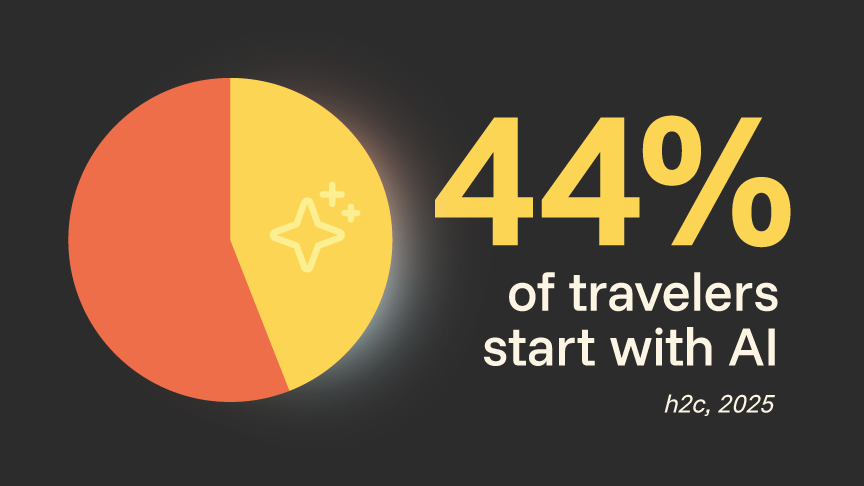
- AI-powered travel discovery is creating a new distribution consideration for hotels as travelers increasingly use AI to research, compare, and plan
- Centralized data and connectivity help hotel groups maintain consistency while adapting more quickly to new channels and demand sources
- The strongest distribution strategies balance portfolio-wide control with the flexibility to respond to property-level and market-specific demand
For years, hotel distribution strategies largely centered on a familiar question: How can a hotel make its inventory available across the channels travelers use to book?
In 2026, simply being available is not enough.
Most established hotels already sell through their direct website, online travel agencies (OTAs), global distribution systems (GDS), and other third-party channels.
The opportunity now is to orchestrate those channels more intelligently: prioritizing profitable demand, responding faster to market changes, merchandising more effectively, and preparing for new ways travelers discover and book hotels.
The best hotel distribution strategies go beyond foundational practices like maintaining accurate inventory or connecting to major OTAs.
Here are seven ways hotel groups can build a more sophisticated distribution strategy in 2026.
1. Optimize channel mix for profitability, not booking volume
More bookings do not automatically mean more profitable bookings.
Hotels should evaluate distribution channels based on the total economics of the reservation, including commission and acquisition costs, average daily rate (ADR), cancellation patterns, length of stay, and opportunities for additional guest spend.
That analysis can reveal where demand creates the most value and help hotels determine when inventory should be prioritized toward particular channels. Instead of pursuing maximum exposure everywhere, the goal becomes building the most profitable mix of demand for each property and market.
2. Create a connected source of truth for distribution
As hotel groups expand across channels and markets, fragmented systems can make distribution increasingly difficult to manage.
A modern hotel distribution system should enable rates, availability, inventory, policies, and other critical information to move consistently across connected channels. Centralizing that foundation can reduce discrepancies while making it easier to introduce new distribution partners or capabilities.
Connectivity matters here, too. Hotels should evaluate technology not only by the channels it supports today, but by how easily it can connect with new partners and demand sources as the market evolves.
3. Prepare hotel data for AI-powered discovery
Travel discovery is expanding beyond traditional search engines and OTAs. Travelers can now ask AI assistants to compare destinations, recommend hotels, evaluate amenities, and help plan entire trips.
That makes the quality and accessibility of hotel information increasingly important.
Hotels should establish clear governance for property descriptions, amenities, policies, room information, location data, and other content that informs digital discovery.
Accurate, structured, and consistent information gives emerging AI-powered experiences a stronger foundation for understanding and representing a property.
As AI becomes a larger part of travel research and commerce, distribution strategy will increasingly involve not only where hotel inventory is available, but whether machines can accurately understand what is being sold.
4. Distribute richer offers, not just rooms and rates
Traditional hotel distribution has largely revolved around room type, rate, and availability. Modern commerce creates an opportunity to think more broadly about what can be sold.
Hotels can develop differentiated offers that.
Extend beyond traditional room-only transactions and better align offers to guest needs.
This shift toward retailing, upselling, and merchandising can help hotels compete on more than price. Instead of presenting inventory as interchangeable rooms, hotels can create offers around the experience a guest wants and communicate more clearly why one option is worth choosing over another.
5. Adapt distribution to changing demand signals
The ideal distribution mix is not static.
A hotel may need different channels during a high-demand weekend than during a midweek need period. Seasonality, booking windows, market compression, traveler segments, and local events can all includence which sources of demand are most valuble at a particular moment.
Rather than setting a distribution strategy once and revisiting it periodically, hotels should use performance and demand signals to continually evaluate where and how inventory is being sold.
The result is a hotel distribution strategy that responds to market conditions rather than relying on the same channel mix year-round.
6. Build distribution around flexibility
The distribution landscape will continue to change. New travel marketplaces, technology partners, AI interfaces, and commerce models will emerge, while existing channels will evolve.
Hotels should therefore consider channel adaptability itself a distribution capability.
An open, connected technology foundation can make it easier to integrate new partners, experiment with emerging channels, and adjust strategy without rebuilding the hotel technology stack every time traveler behavior changes.
For hotel groups, that flexibility can become a competitive advantage: the faster an organization can respond to a valuable new source of demand, the faster it can begin learning from and optimizing that channel.
7. Balance portfolio-wide control with property-level strategy
For hotel management companies and multi-property groups, distribution becomes more complicated as the portfolio grows.
Centralization can provide visibility, governance, and operational efficiency, but every hotel does not necessarily need the same channel strategy. A resort destination, airport hotel, and urban business hotel may serve very different travelers and experience very different demand patterns.
The strongest approach combines centralized technology and portfolio-wide insight with enough flexibility for individual properties or markets to respond to their own demand.
That balance allows hotel groups to scale distribution without treating every property as though it operates in the same market.
Building a smarter hotel distribution strategy
The fundamentals of hotel distribution still matter. Hotels need accurate rates and availability, reliable connectivity, strong direct channels, and access to the third-party channels their guests use.
But those capabilities are increasingly the starting point rather than the strategy itself.
In 2026, leading hotel distribution strategies focus on what happens beyond connectivity: understanding the economics of each booking, making inventory and content accessible across an evolving ecosystem, adapting to demand, creating richer offers, and preparing for AI-powered commerce.
Hotels that build their distribution strategy around profitability, flexibility, and connected data will be better positioned to respond as the way travelers discover and purchase stays continues to evolve.
Hotel distribution strategy FAQs
What is a hotel distribution strategy?
A hotel distribution strategy is the approach a hotel or hotel group uses to make its inventory and offers available to travelers across direct and third-party channels. A modern strategy also considers channel profitability, technology connectivity, content and data quality, demand patterns, and how inventory should be distributed across different markets and traveler segments.
What are the main hotel distribution channels?
Common hotel distribution channels include hotel websites and booking engines, OTAs, global distribution systems, travel advisors, travel management companies, wholesalers, and other third-party marketplaces. Emerging AI-powered travel experience already play a growing role in how travelers discover and access hotel options.
How is AI changing hotel distribution strategy?
AI is creating new ways for travelers to discover, research, and compare hotels. This increases the importance of maintaining accurate, structured, and consistent hotel information that AI-powered platforms can understand. Over time, AI may also create new commerce and booking pathways that hotels need to incorporate into their broader distribution strategies.
How can hotels improve their distribution strategy?
Hotels can improve distribution by evaluating channel profitability, centralizing and improving the quality of hotel data, responding to demand signals, developing richer offers, maintaining flexible connectivity, and regularly assessing whether their channel mix supports broader commercial goals.
About the author
Aven Hospitality is an independent global technology and SaaS leader in the hospitality industry, powering how hotels sell, distribute, and deliver guest experiences. SynXis, the leading global hospitality commerce and distribution platform, coordinates hotel information across 600+ integrations to ensure accuracy, consistency, and competitiveness wherever travelers discover, compare, and book.
Trusted by 35,000+ hotels across 190+ countries, Aven Hospitality serves as the connective layer behind many of the world’s most iconic brands, simplifying complexity behind the scenes so hoteliers can operate with confidence today and stay ready for what’s next.