Revenue attribution: how to track and grow your direct bookings
Revenue attribution is essential for understanding what drives bookings and where to invest your marketing budget. Learn how hotels can track performance, improve conversion, and grow direct bookings.
Published May 5, 2026 • 3 minute read
Key takeaways:
- Revenue attribution connects marketing efforts to actual bookings, not just clicks or impressions
- A strong direct booking website is essential for accurate tracking and higher-margin conversions
- Improving hotel conversion requires visibility across the full guest journey
- Integrated systems and dashboards make attribution less fragmented
What is revenue attribution in hospitality?
Revenue attribution in hospitality is the process of identifying which marketing efforts, including paid ads, campaigns, channels, and touchpoints contribute to a booking.
This includes everything from paid search ads and social campaigns to organic discovery and retargeting efforts.
For hotels, that goes beyond simply knowing where traffic comes from. It means understanding how a guest moves from discovery to decision, and which interactions actually influence that outcome.
A traveler could:
- Discover your property through a paid search ad
- Return later through organic search
- Re-engage through a retargeting ad tied to that campaign
- Finally book through your direct booking website
Without a clear view of that journey, it is easy to misattribute success to the last click rather than the full sequence of interactions that led to conversion. Each of these interactions is part of a coordinated marketing effort, not isolated events.
Because these marketing tactics often span multiple ads, campaigns, and channels, understanding their combined impact is critical.
Why revenue attribution matters for direct bookings
Many hotels evaluate performance based on surface-level metrics like clicks, impressions, or bookings by channel. While those metrics are valuable, they do not tell the full story. Revenue attribution shifts the focus from activity to impact.
It answers questions like:
- Which campaign drove the highest-value bookings?
- Where are guests dropping in the booking journey?
- Which marketing channels and ads influence conversion most effectively?
When the goal is to grow direct bookings, this information is key. Unlike OTA channels, where attribution is largely controlled externally, your direct booking website gives you the visibility and control to optimize performance.
When attribution is clear, marketing decisions become more precise. Spend can be shifted toward what works.
The role of your booking engine
If your marketing is driving clicks, your booking experience is where that demand is either captured or lost.
That’s why having an integrated booking engine within your website is non-negotiable. Without it, even the most effective campaigns can fall short. Traffic may increase, but conversions remain limited.
An embedded booking experience does two important things: improve performance, and make that performance measurable. When your booking engine is fully integrated into your website, it allows you to:
- Maintain a seamless journey from discovery to booking
- Reduce friction that can disrupt conversion
- Keep users within your brand experience
The connected data story
Every interaction, from landing page engagement to checkout behavior, is part of a connected data story. Instead of viewing performance in silos, hotels can start to see how campaigns, content, and user behavior collaborate to drive bookings.
For example, if users consistently click on your ads or campaigns but abandon after the landing page, that signals friction. It indicates a disconnect between your marketing (what the ad promises) and your booking experience (what the website delivers). Your messaging is working on the ad itself, but there’s something disconnecting from your website experience.
Rather than guessing what is working, hotels can use insights from their booking engine to refine marketing and their user experience.
From fragmented data to full-funnel visibility
One of the biggest challenges with hotel data management is fragmentation. Most hotels are working across multiple systems, where marketing performance, website behavior, and reservation data live separately. This fragmented view makes it difficult to understand what is actually driving bookings.
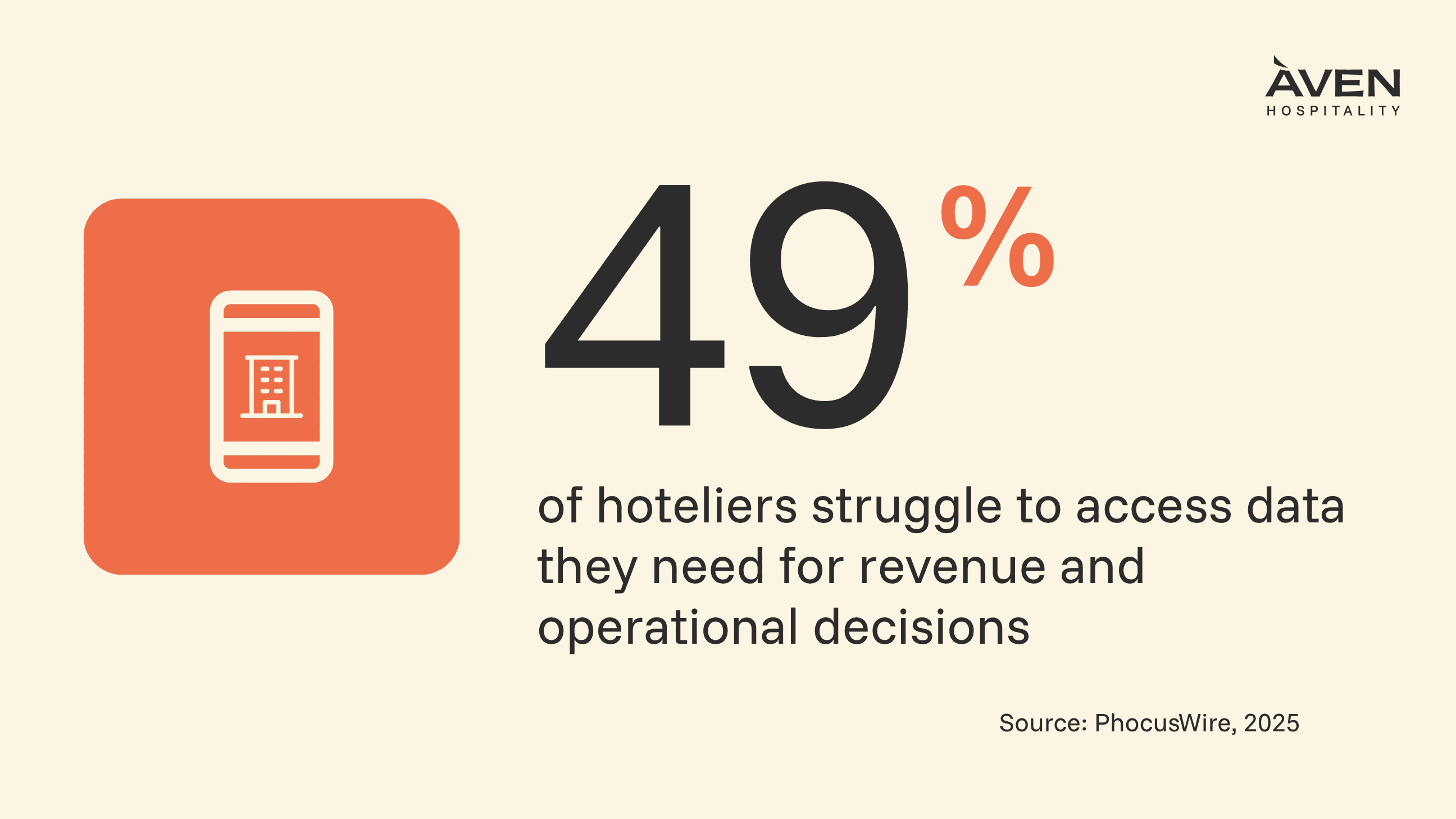
Full-funnel visibility changes that.
By bringing reservation data, channel performance, and guest behavior into one place, hotels can see how demand turns into bookings.
With the ability to filter data by property, channel, segment, and booking patterns, teams can:
- Identify high-performing campaigns and channels
- Spot revenue leakage or underperformance
- Make more informed decisions, faster
This is where your hotel data becomes actionable.
Turning insights into sustainable growth
Ultimately, revenue attribution is about creating a feedback loop.
Marketing efforts drive traffic, and guest behavior drives insight. Attribution connects that insight to revenue, and those learnings inform the next round of strategy.
Over time, this leads to more efficient spend, stronger performance, and a more effective booking engine.
For hotels looking to grow direct bookings, the advantage is clear; when you understand exactly what drives results, you can scale it.