How to prepare your hotel for AI-powered search
Travelers are increasingly turning to AI-powered search and assistants to discover hotels. Learn what hotels need to do to remain visible and competitive as AI transforms travel discovery.
Published August 19, 2026 • 4 minute read

Not long ago, planning a trip meant opening dozens of tabs. On average, travelers review 141 pages of travel content before booking, comparing hotels across search engines, online travel agencies (OTAs), review platforms, maps, and brand websites.
Today, that journey is starting to look very different.
Instead of scrolling through endless search results, 44% of travelers are turning to AI-powered assistants and conversational search tools to find recommendations tailored to their specific needs. A guest may ask, "What's the best all-inclusive family-friendly resort in Bali with a kids' club?" and receive a customized answer almost immediately.
As travelers increasingly rely on AI-powered assistants to plan trips, hotels face a critical question: Will AI know enough about your property to recommend it?
The good news is that becoming AI-ready doesn't require a complete technology overhaul or starting from scratch. AI readiness isn't about implementing new AI tools. Instead, it means making sure AI has access to reliable information about your hotel so it can recommend your property to the right travelers.
Hotel discovery is entering a new era

AI isn't replacing traditional search overnight, but it's rapidly becoming another way travelers discover hotels.
Rather than searching with a few keywords, guests can now describe exactly what they're looking for through natural conversation. AI can interpret factors such as budget, destination, amenities, travel purpose, accessibility requirements, and personal preferences all within a single query.
For hotels, this shift represents a significant change as it generates a more guided, personalized booking experience than traditional search results. Success is no longer determined solely by search rankings – which is why hotels are focusing on improving their visibility as traveler discovery habits continue to evolve.
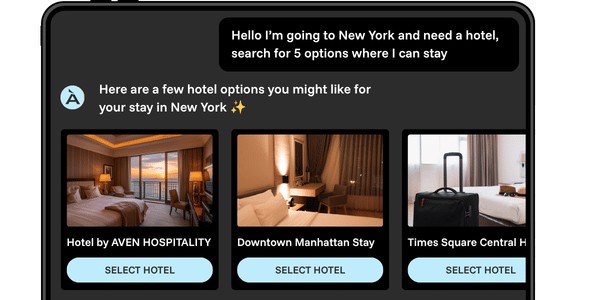
What AI knows about your hotel matters
Before AI can recommend a hotel, it first needs to understand it. AI gathers information from multiple sources, including hotel websites, OTAs, search engines, review platforms, and other publicly available content.
But the challenge is that these sources are often inconsistent and there is no way to control what gets written.
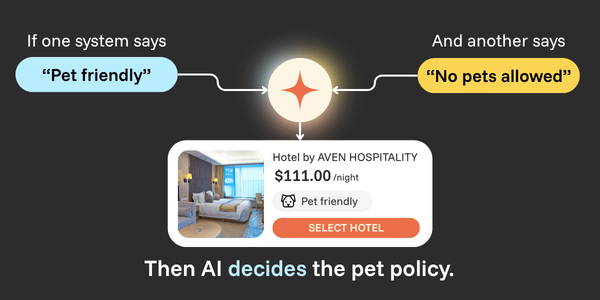
A hotel's website might list itself as pet-friendly, while an OTA listing may not. Room descriptions may vary across channels. Policies can become outdated. Amenities may be listed differently from one platform to another.
When information is incomplete or conflicting, AI has less confidence in the property's profile and may struggle to present it accurately to potential guests. Even small discrepancies can influence recommendations.
AI can only work with the information it has access to. The more comprehensive your hotel's information is, the more effectively AI can match your property with the right guests. That makes data quality more than an operational matter but instead gives your hotel a significant competitive advantage.
AI-readiness starts with strong foundations
The hospitality industry has already moved beyond experimentation, with 80% of hotel chains reporting that they use AI in some form today.
However, successful AI adoption starts long before implementing advanced solutions. Hotels need assurance that room details, rates, inventory, property descriptions, policies, amenities, and guest-facing content all remain consistent across systems and channels.
Connected technology also plays an important role. Preparing for AI-powered discovery requires connected systems that keep hotel information synchronized across channels. Platforms such as Aven Hospitality's SynXis help hotels centralize distribution, commerce, and guest data, creating a stronger foundation for consistent digital visibility. Information needs to flow efficiently across the guest journey, allowing updates to be reflected consistently wherever guests interact with the property.
Rather than chasing every new AI trend, hotels are often better served by strengthening existing data points to support long-term success. A strong foundation not only improves AI readiness today but also prepares hotels for innovations that are still on the horizon.
Some practical first steps may include:
- Reviewing and updating property information across digital channels
- Strengthening guest-facing content
- Identifying inconsistencies in amenities, policies, and room descriptions
- Improving internal data management processes
- Evaluating whether existing technology systems are effectively connected
The hotels that prepare today will win tomorrow
While AI is already influencing how travel decisions are made, the industry is still in the early stages of this transformation. Only 8% of hotel chains have a company-wide AI strategy, despite widespread adoption of AI tools - yet 89% plan to expand AI applications in the next 12–24 months.
Strong data foundations and connected systems can help hotels attract more direct bookings while improving operational performance and creating better guest experiences that build trust and loyalty over time.
The actions hotels take today will shape how they are represented as AI becomes increasingly embedded throughout the travel journey. Seamless system integration is the top AI investment priority for 61% of hoteliers. As a result, hotels are investing in the capabilities needed to remain visible and strengthen their competitive position as AI continues to reshape travel discovery.
The first step to AI-readiness: knowing where you stand
The industry is still in the early stages of this transformation, giving hotels time to prepare. The decisions made today will influence how effectively properties can adapt as AI becomes a more significant part of the travel experience.
Those that take action now will be better equipped to respond to changing traveler behavior and take advantage of new opportunities as they emerge.
The first step is assessing where your hotel stands today and identifying practical actions to prepare for what's next. Ready to evaluate your hotel's AI readiness?
Our free Hotel AI Readiness Guide will help you:
- Understand how AI is reshaping hotel discovery and booking
- Explore the six questions every hotel should ask before AI becomes a primary guest touchpoint
- Evaluate readiness across data, technology, and guest experience
- Complete a practical AI readiness checklist with your team
- Identify actionable next steps without needing deep AI expertise